
Roosterfish in Panama
Panama is renowned for its roosterfish fishing, with several prime hotspots including the Pearl Islands and the waters surrounding Taboga Island. These areas offer diverse habitats where roosterfish thrive, and anglers can target them using a wide variety of techniques.
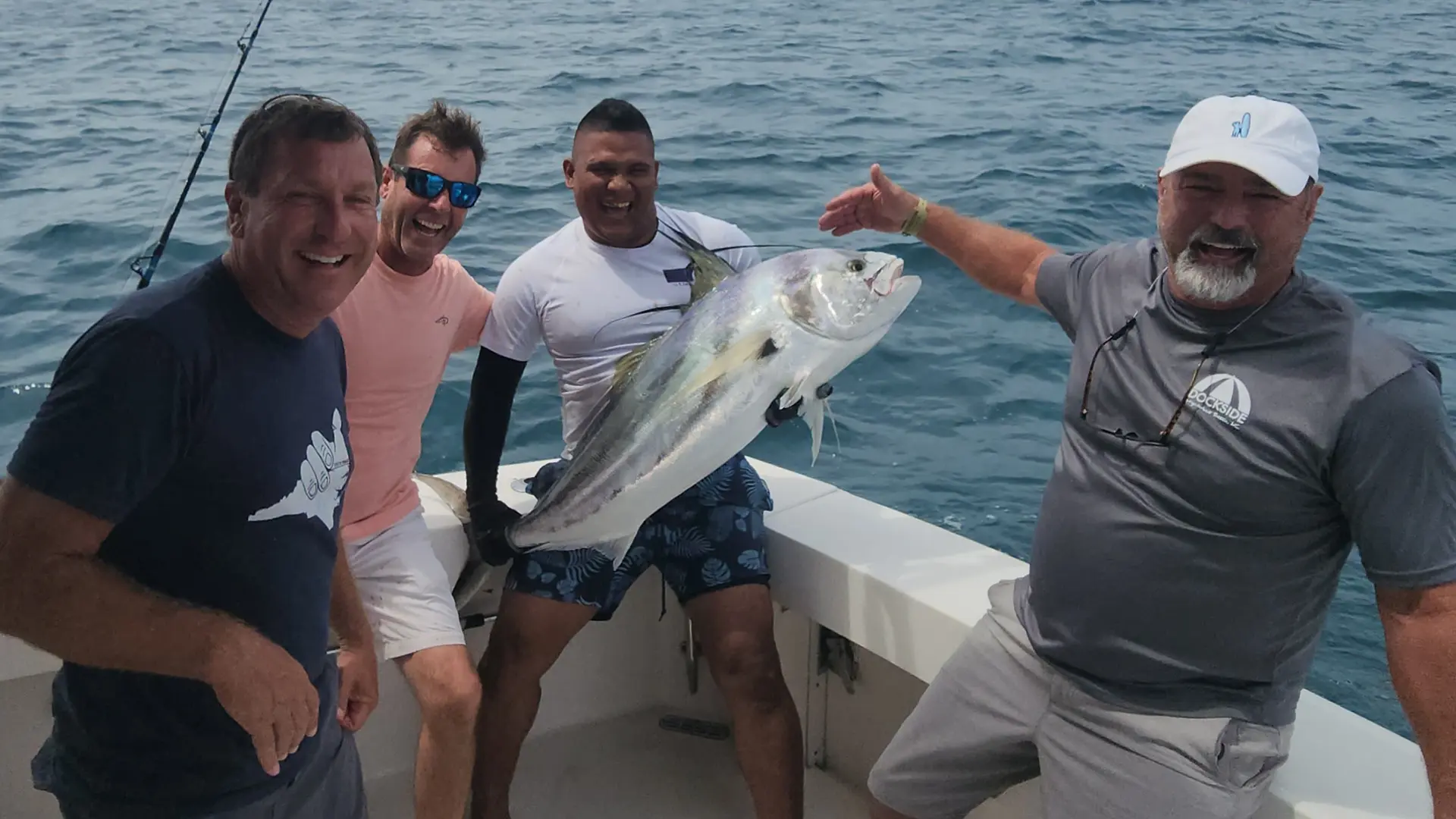
The roosterfish (Nematistius pectoralis) is a species found in the warmer waters of the eastern Pacific Ocean, ranging from Baja California in Mexico all the way down to Peru.
It is instantly recognizable by its striking appearance, most notably its tall, comb-like dorsal fin that resembles the crest of a rooster, which is exactly where it gets its name. The roosterfish is celebrated for its powerful, acrobatic fighting ability, making it one of the most sought-after targets among recreational anglers.
They live primarily in coastal waters close to shore, frequently found around rocky reefs, sandy flats, and surf zones where they hunt prey such as small fish, crustaceans, and squid.
Prized for the challenge they present, roosterfish are commonly targeted using live bait, lures, or fly fishing techniques. They are typically released after being caught to help protect their populations, as they are widely regarded as a valuable sport fish throughout the region.
Roosterfish can grow to impressive sizes — the average adult reaches between 3 and 4 feet in length (roughly 0.9 to 1.2 metres) and weighs between 30 and 50 pounds (approximately 14 to 23 kilograms).
Larger specimens have also been recorded, with some individuals exceeding 5 feet (around 1.5 metres) in length and topping 100 pounds (approximately 45 kilograms). These trophy-sized roosterfish are highly coveted by anglers for both their sheer size and their legendary fighting spirit.
When to Fish for Roosterfish?
Roosterfish can be found in Panama year-round, but certain seasons and conditions can offer better chances of a successful catch. The best times to target roosterfish in Panama generally align with the following:
- Incoming tides: Roosterfish are known to feed aggressively during incoming tides, particularly around structures such as rocky points, reefs, and river mouths. Anglers tend to have better luck during high tide, when baitfish and prey are pushed closer to shore.
- Morning and late afternoon: Roosterfish are most active in low-light conditions — early morning and late afternoon being prime windows. During these hours they are more likely to be feeding near the surface, giving anglers a distinct advantage.
- The cooler months: While roosterfish can be caught throughout the year, many anglers prefer targeting them between June and December. During this period, rainfall can slightly lower water temperatures, which tends to make roosterfish more active and eager to feed.
In general, fishing during the rainy season, on cooler incoming tides, in low-light conditions at dawn or dusk, and through the cooler months can all significantly improve your chances on the water. As always, local knowledge and the guidance of an experienced crew can make all the difference between a good day and a great one.