

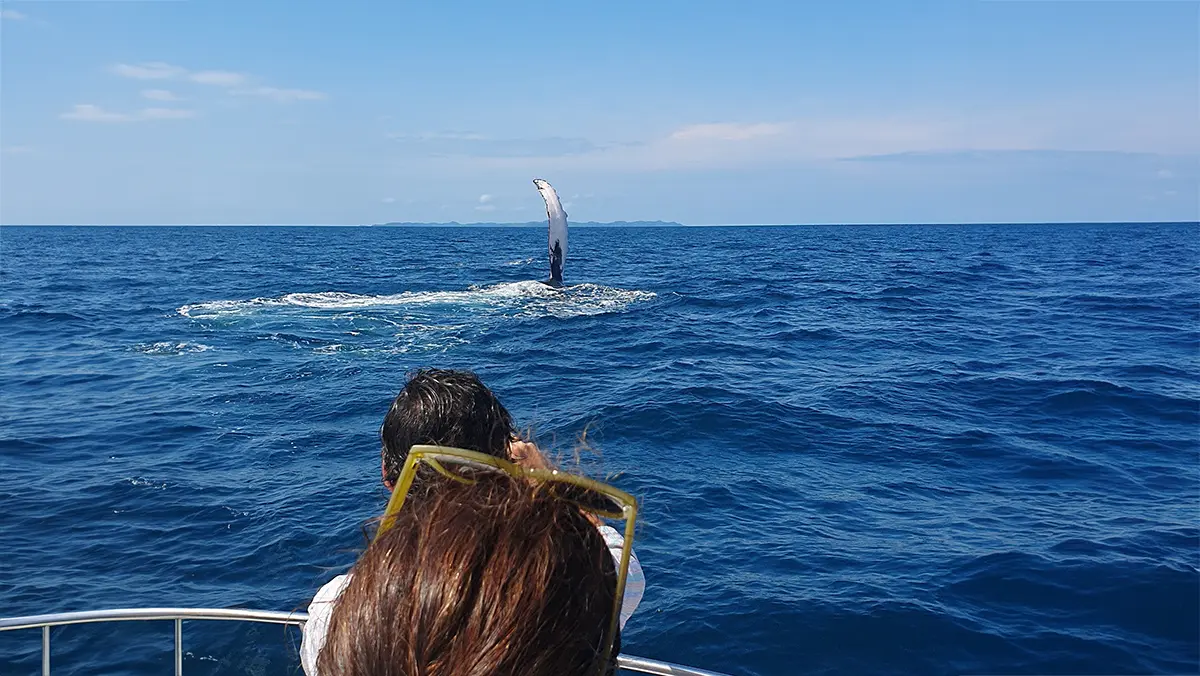
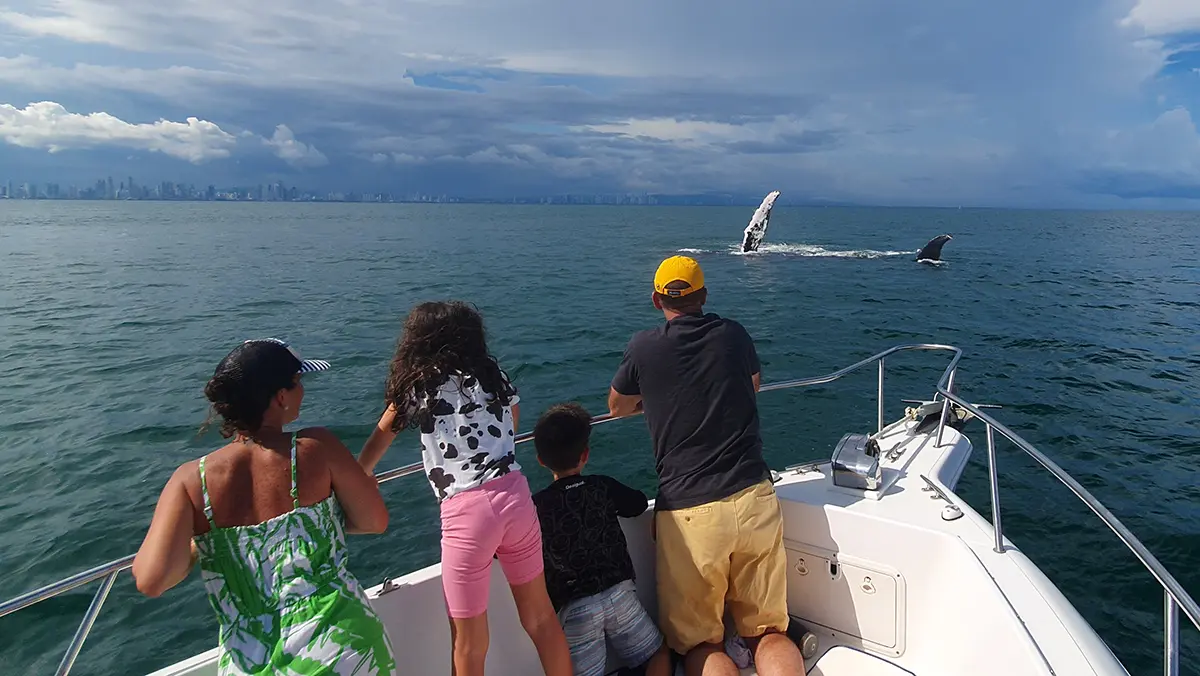
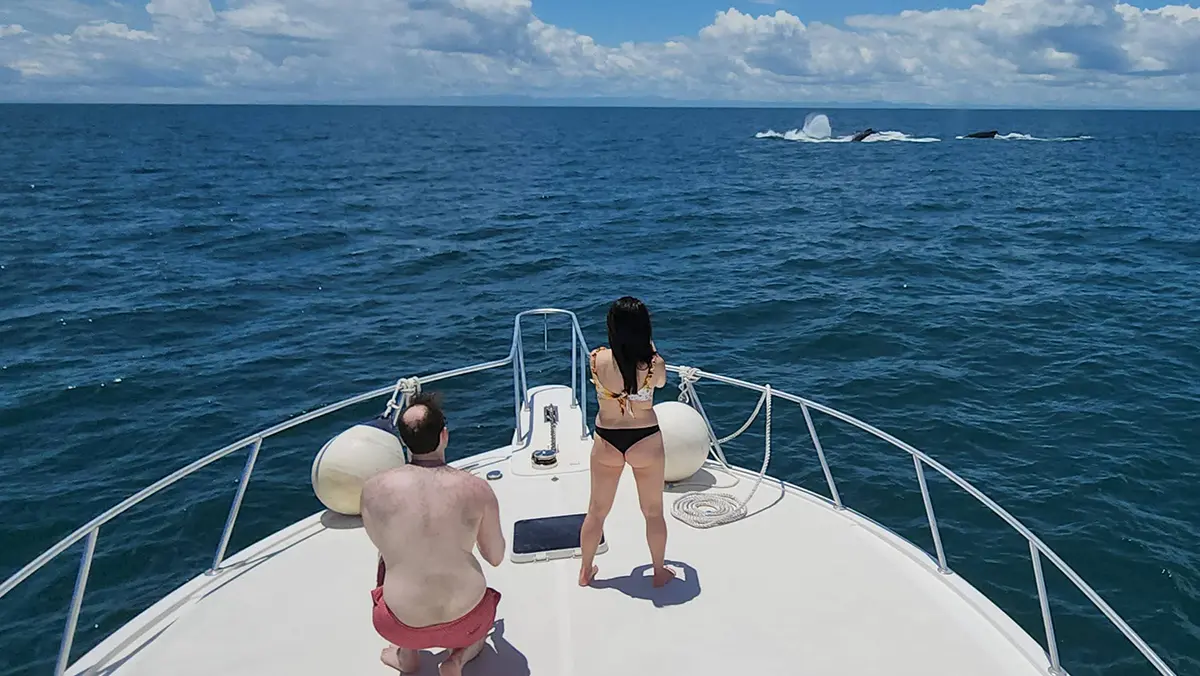
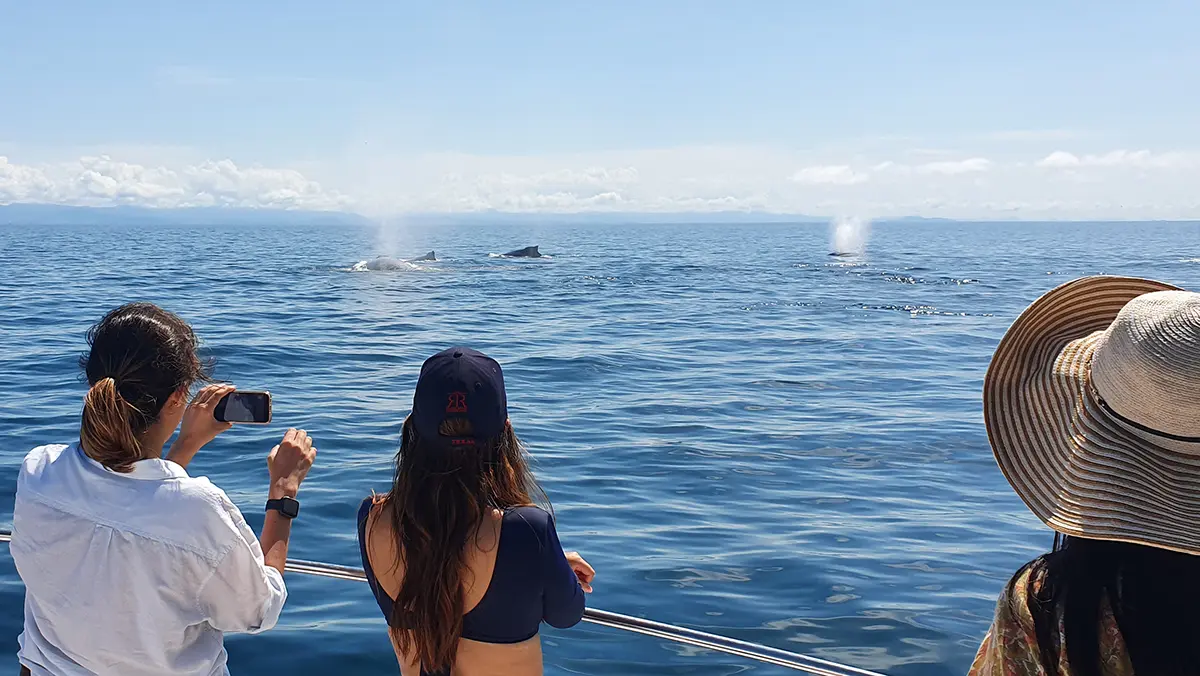
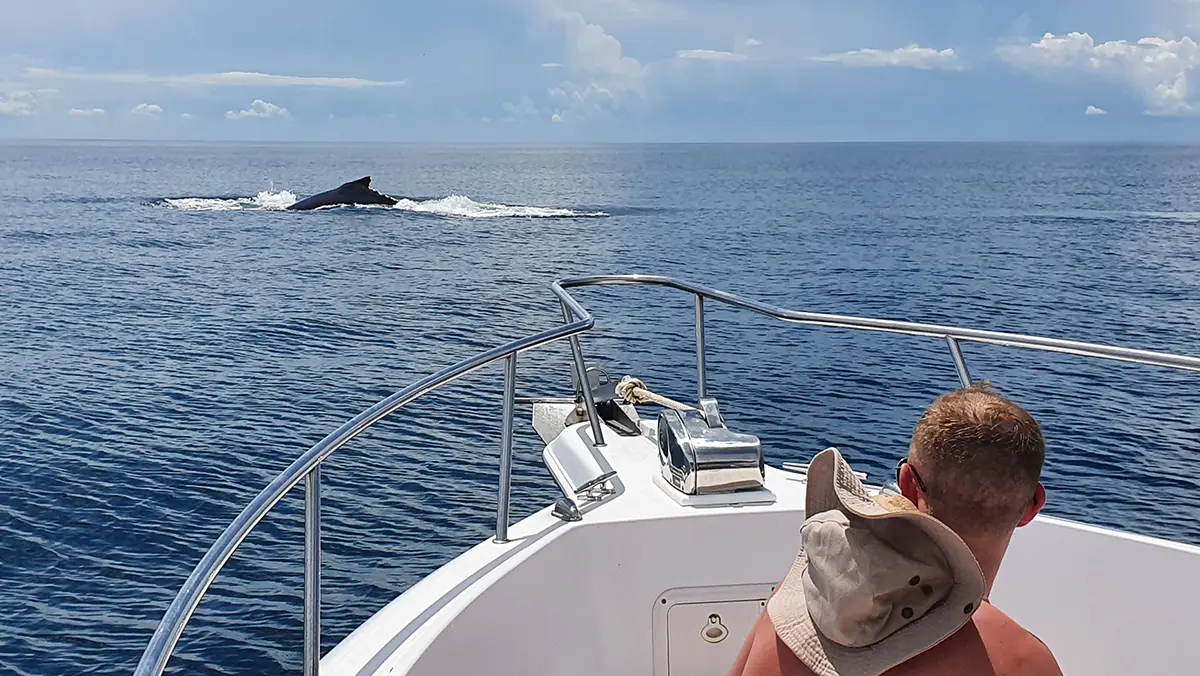
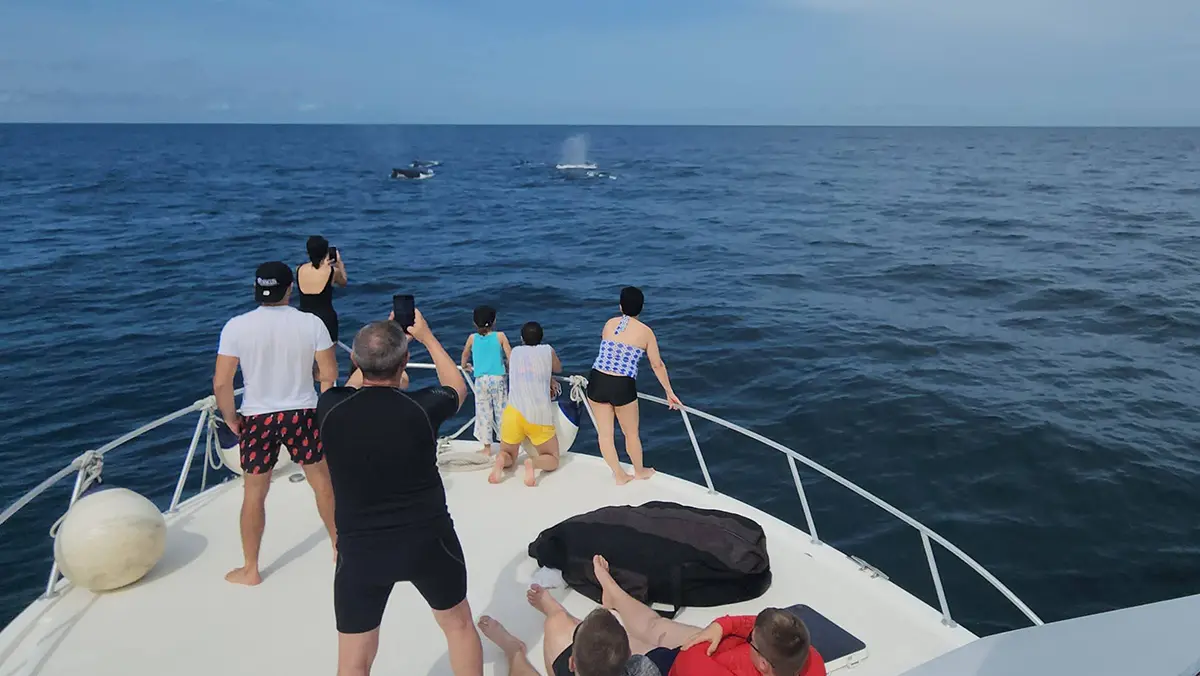
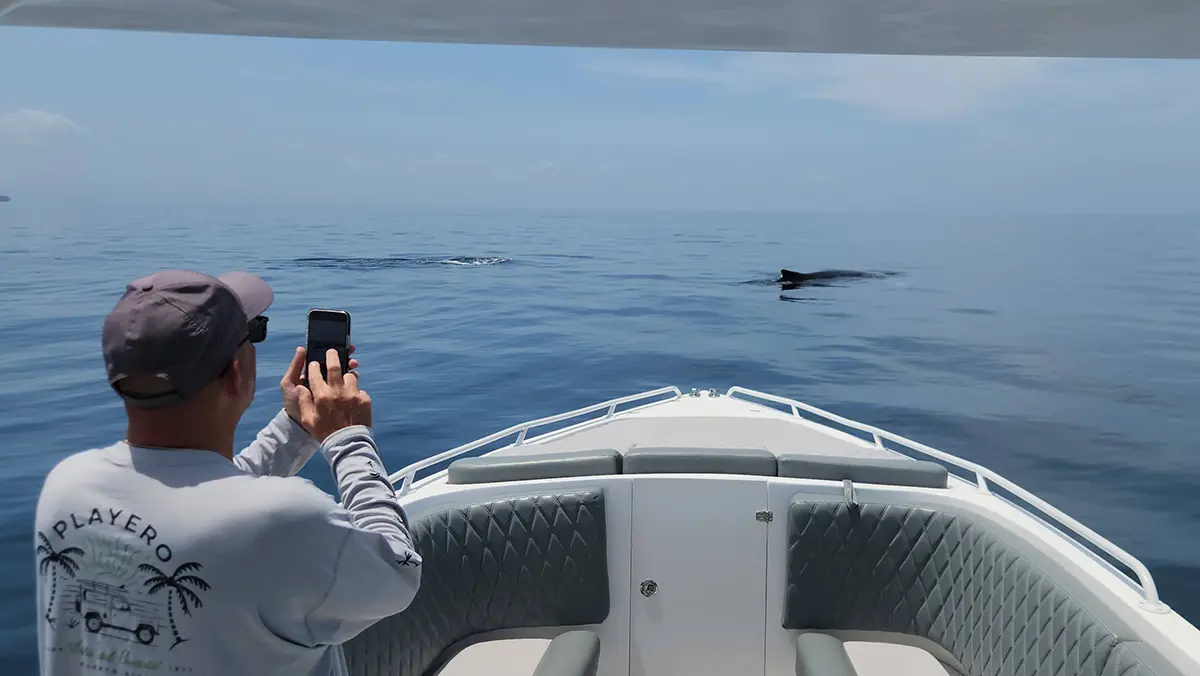
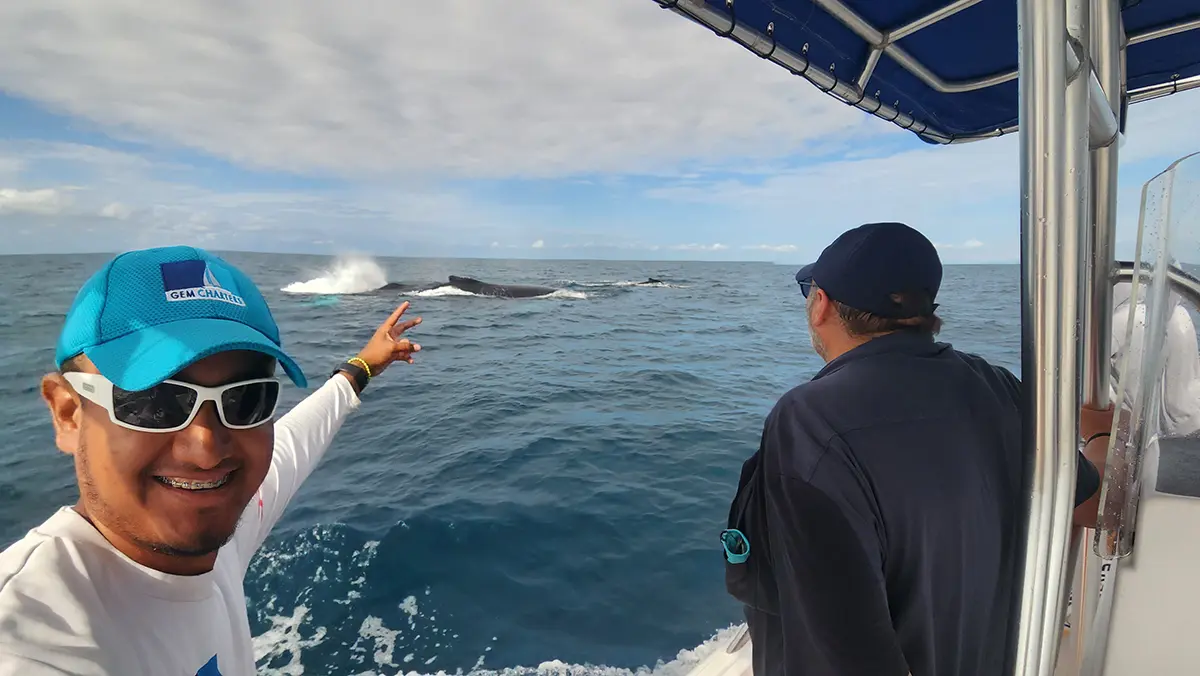
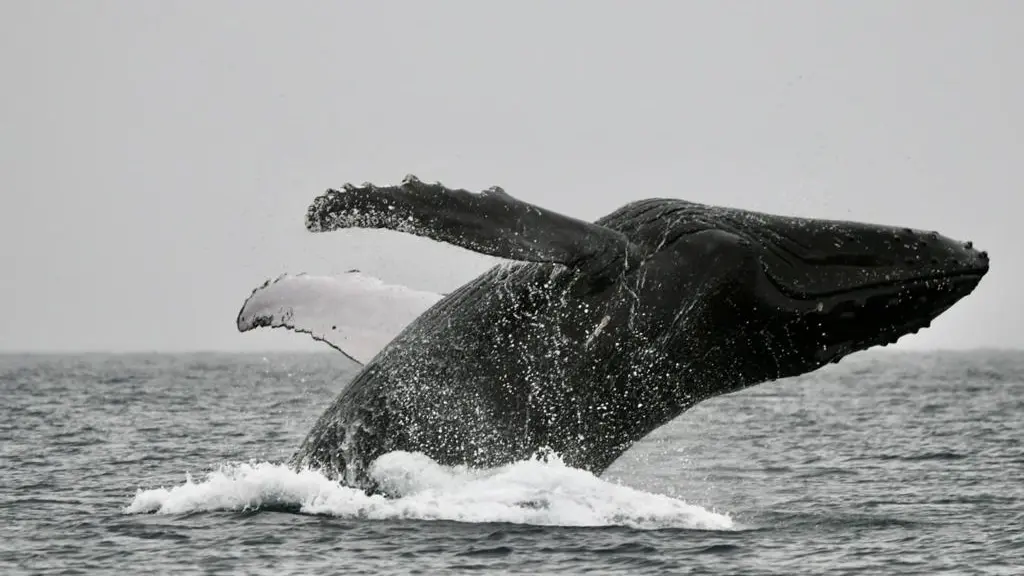
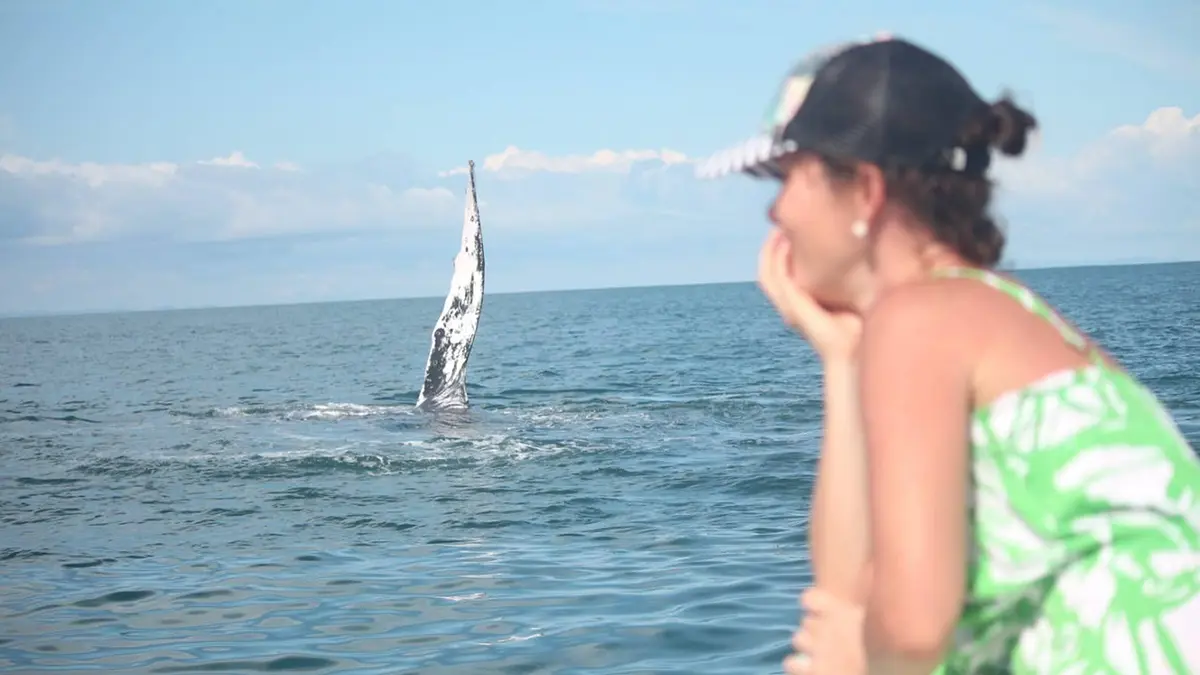
- Humpback whales are our main attraction since they have to surface every 40 minutes to breathe. They don’t live full-time in Panama (or anywhere, for that matter); they come to the warmer waters of Panama to escape the cold winters of the poles.
- The short-finned pilot whale resides in Panama (mainly around the Gulf of Chiriquí and Coiba Island). However, since they prefer to live in deeper, offshore areas, they are harder to spot.
- Bryde’s Whales are also permanent residents of Panama. Their breathing system allows them to blow or exhale underwater, making them harder to see.
- Blue Whales. Yes, the largest known animal is a visitor to Panama’s Pacific coast. They are hard to spot because, due to whaling, there aren’t many left.
- Other species: You can see other whales like the Sei Whale and Sperm Whale since they are common visitors to the Pacific Ocean. Other smaller species include the pygmy beaked whale, Blainville’s beaked whale, pygmy sperm whale, dwarf sperm whale, Curvier’s beaked whale, minke whale, and melon-headed whale.
Whale Watching Tour at Pearl Islands
All of our Whale Watching Tours include
Book your Private Whale Watching Tour
Enclosed Bathroom, marine sound system, freshwater shower, convertible shade
Enclosed bathroom, marine stereo, 2 comfortable lounge areas, 1 mini cabin
2 cabins, 2 bathrooms, A/C, complete galley and oplen Flybridge
3 Cabins, 3 Bathrooms, complete galley, home theater and A/C
4 Cabins, 3 Bathrooms, complete galley, home theater and A/C
5 cabins, 4 bathrooms, complete galley, living room, jacuzzi and A/C
Whale watching Tour Activity Details:
Full day (8 to 9 hours).
This amazing experience departs from Flamenco Marina in the Amador Causeway aboard the yacht of your choosing. This tour is primarily set against the breathtaking backdrop of the crystal-clear waters of the Pearl Islands Archipelago (35 nautical miles from Panama City). It takes around 1.5 to 2.5 hours to reach Pearl Islands, depending on the vessel you choose.
Embark on the most extraordinary Panama whale watching tour that transcends the expected. This tour combines the thrill of encountering these majestic marine mammal giants with the excitement of snorkeling and fishing adventures.
On this tour, you will also visit several spectacular islands in the Las Perlas archipelago. Some of them are Contadora Island, Chapera Island, Mogo Mogo Island, and Saboga Island. During your trip, you might see dolphins, sea rays, sea turtles, and other marine fauna.
The option to enhance the experience with exclusive amenities such as a private pool or kayaks is available for those seeking additional indulgence. This ensures that every moment on this multifaceted journey is tailored to exceed expectations and create lasting memories on the Pacific waters. Check out our additional services.
Welcome to the Best Whale Watching Tour in Panama! Every year, the Pacific Coast of Panama is the scenario of one of the great wonders of nature: the migration of humpback whales. In their path of more than 5,000 miles (8,000 km approx.) from the Arctic and Antarctica. They seek warm waters to mate, calve, and raise their young. Whale Watching Season in Panama is from June to November approximately, this may vary each year.
Did you know this is one of the longest migrations in the world? YES! It’s also one of the few migratory routes that crosses the equator. So it’s one of Mother Nature’s most extraordinary shows! Live this unique experience in our special seasonal Panama Whale Watching Tour. Choose between our shared semi-private charter option or our most popular private boat charter option.
This private whale-watching tour not only offers the chance to witness the graceful movements of whales but also invites participants to enjoy the paradise beaches of the archipelago and enjoy a fishing session.
Do you have any questions?
Are you intrigued by the enchanting option of the whale-watching tour but have a sea of questions floating in your mind? Wondering about the best time to spot whales? Is it safe? What are the rules to follow on this whale-watching tour? Is it worth it? Set your curiosity afloat and satisfy your marine inquisitiveness by perusing our comprehensive Whale Watching FAQ! What you need to know from whale behavior to tour logistics.
Additionally, we answer questions about what to expect during your adventure. Certainly, our FAQ is your go-to guide for unlocking the mysteries of the deep. Check out our FAQ about whale watching, and let the waves of wisdom guide your anticipation!
What kind of whales are there in Panama?
Is it Safe?
Can I swim with the whales?
Can you go whale watching in the rain?
Is whale watching ethical?
What are the rules for whale watching?
Is it worth it?
Whale watching can be a safe and enjoyable activity when conducted responsibly and with respect for the animals and their environment. To make sure it is a safe and fun experience, you should consider a few things when booking your tour:
- Choose an operator with a good reputation. They will probably prioritize safety, follow the regulations, and hire experienced guides knowledgeable about the laws, whales’ behaviors, and marine landscape.
- Follow guidelines and regulations: Panama has specific guidelines and regulations to ensure the safety of humans and marine life. Make sure you follow the crew’s guidance.
- It’s vital to maintain a safe distance from the whales. Approaching too closely can disturb their natural behavior and potentially put humans and whales at risk. Different regions and countries have specific distance requirements; for Whale Watching in Panama, the vessel should be at least 250 meters from the cetaceans unless the whales approach the boat alone.
- Remember that you are a guest in their environment and should show respect. Don’t do anything to stress or harm the whales, such as feeding them, throwing objects into the water, or making sudden movements.
- The boat should have proper safety gear, such as life jackets and communication equipment; ask your tour operator before departure.
- If you have any health conditions that could be aggravated by sea travel, it’s wise to consult a medical professional before participating in a whale-watching tour.
- If you’re considering bringing children or individuals with special needs, ensure the tour operator can accommodate their specific requirements.
It is illegal in Panama to swim with Whales. It’s forbidden to swim, scuba dive, snorkel or even touch the whales. In any case, it is not recommended to swim with them as whales are still wild animals, making them unpredictable. Whales’ size and strength pose a threat to humans if they were to hit you, even by accident. Also, remember that most whales coming through Panama are mothers with their calves, who will act defensively if they perceive a threat to their babies. If any company in Panama is offering this service, it is probably an illegal operation, we always recommend you book your tours with licensed professionals. That being said, if you take a whale-watching tour with Gem Charters, you will also be able to go island hopping, fishing, snorkeling and visit several warm water beaches.
Yes, you can go whale watching in the rain, but whether or not the tour will proceed depends on various factors, including the severity of the rain, sea conditions, and the policies of the whale-watching operator:
- Whale-watching operators may continue their tours in light rain or drizzle if sea conditions are safe. Others might cancel or reschedule tours if the rain is heavy or the weather makes the sea conditions rough.
- Heavy Rain could affect visibility, making it challenging to spot whales and enjoy the experience. However, some species of whales are more active during rainy weather, so you might have a unique opportunity to observe certain behaviours.
- Rainy weather can make the boat ride less comfortable for passengers. However, rain in Panama is fairly warm, so you will not suffer from hypothermia or other risk factors that you might face in colder climates. Also, remember that rain might not last too long as you are in the tropics.
It can be ethical when conducted responsibly and following guidelines, prioritising the well-being of the whales and the environment.
Ethical whale watching aims to minimize disturbance to the animals and their habitats while providing educational and sustainable experiences for participants.
- Ethical whale watching prioritizes the respect and well-being of the animals.
- Responsible operators follow strict guidelines to minimize their impact on the marine environment. This includes adhering to regulations about engine noise, waste disposal, and avoiding sensitive habitats.
- Local Involvement: Ethical operators work closely with local communities and authorities to ensure their activities align with the community’s interests and comply with local regulations.
- It can help marine biologists and researchers contribute to scientific knowledge about whale behavior, migration patterns, and population dynamics.
- Tours with smaller groups (such as our private tours) have less impact and a more intimate experience, reducing the potential for overwhelming the animals.
Look for reputable companies with a proven track record of responsible practices, positive customer reviews, and adherence to local regulations. By supporting ethical whale watching, you can contribute to protecting marine life while enjoying an enriching and memorable experience.
We mentioned some already, but just to make it clear, this is what your whale-watching tour rules should be:
- Keep a safe distance from the whales to avoid causing stress or disrupting their natural behaviors.
- Do not engage in behavior that could harass, chase, or disturb the whales. Avoid sudden movements, loud noises, and actions that could startle the animals.
- Do not attempt to feed the whales or throw any objects into the water. Feeding can disrupt their natural foraging behaviors and harm their health.
- Do not swim or dive near whales, which can be dangerous for humans and animals. Whales are large and powerful creatures, and close encounters can lead to accidental collisions; it is also illegal in Panama.
- Spending extended periods with whales can cause stress. Responsible operators limit the viewing time to ensure the animals are not exposed to prolonged human presence.
- Approach whales slowly and cautiously, without sudden changes in speed or direction. This minimizes the chance of startling the animals.
- Keep engine noise to a minimum to avoid disturbing the whales. Quiet engines are less likely to disrupt their behaviors and communication.
- Do not crowd multiple boats around a single group of whales. This can stress the animals and lead to unsafe situations.
- Be particularly cautious and respectful when encountering a mother whale with a calf. Mothers with calves are especially vulnerable and protective.
- Different regions and countries may have specific regulations and guidelines for whale watching. This guide was created mainly based on Panamanian laws and experience. Always adhere to the local rules and recommendations.
- Listen to and follow the instructions of the crew members or guides on the whale-watching tour. They are trained to ensure your safety and the well-being of the animals.
Whether whale watching is worth it depends on your expectations for the trip. Many companies just take you out to see the whales for a while and then return to land, but with Gem Charters, you will also get a fishing, island hopping, and Crystal Clear beaches experience. We promise the tour with Gem Charters is worth it. Other things you should consider (and value) before booking:
- Whale watching can be an incredible and awe-inspiring experience. Observing these magnificent creatures in their natural habitat can create lasting memories.
- Whale-watching tours offer educational value because our tours include knowledgeable crew who provide information about whale behavior and conservation.
- The tour is also a unique opportunity to connect with the natural world and appreciate the beauty and diversity of marine environments. Being out on the water and surrounded by nature can be a refreshing and meditative experience.
- Spotting a whale in the wild can be thrilling and rewarding, but you might also see other marine animals, such as dolphins, turtles, sharks, sea rays, and more.
- By participating in a reputable tour, you’re supporting efforts to raise awareness about the importance of protecting these animals and conserving their habitats.
Fishing is also an option while whale watching in Panama.
One of the best things about having a private yacht charter for whale watching is that you get to choose what you do. And since the Pearl Islands is one of Panama’s prime fishing spots, anglers can cast their lines and pursue prized species. The archipelago is widely known for its abundance of Big Game fish. Sailfish, Marlin, Big tunas, and Mahi Mahi are available in these waters.
Our vessels are fully equipped with professional fishing gear so you can make the most out of your trip.
Want a different vessel?
Contact us to book a different vessel or to personalize your trip

